What Makes A Good Business Website?
Across Sheffield, there are plenty of businesses doing great work that still struggle to generate inquiries online.
In many cases, the problem isn't the business itself.
It's the website.
Most businesses know they need a website, but simply having one doesn't guarantee results.
We've all visited websites that look impressive at first glance but leave us wondering what the business actually does, how to get in touch, or whether they're the right fit for the job.
A good business website isn't necessarily the most expensive or visually impressive.
More often than not, it's the website that makes life easiest for the customer.
Clear Information Matters
One of the biggest mistakes businesses make is assuming visitors already understand what they do.
They don't.
When someone lands on your website, they should be able to answer three questions within a few seconds:
- What does this business do?
- Can they help me?
- What should I do next?
If those answers aren't immediately obvious, there's a good chance potential customers will leave and continue their search elsewhere.
Whether you're a tradesperson in Hillsborough, a café owner on Ecclesall Road, or a professional service business in Sheffield city centre, visitors should immediately understand what you do and how to contact you.
We've seen businesses invest heavily in a website only to hide their phone number, bury their services in complicated menus, or make visitors work too hard to find basic information.
Take a look at your own website.
If a first-time visitor landed on your homepage today, would they instantly understand what your business offers?
Answering Customer Questions
Think about the last time you visited a business website.
You probably weren't there to admire the design.
You were looking for information.
Maybe you wanted to know:
- What services they offer
- How much something costs
- Whether they've worked with businesses like yours before
- How to contact them
The best websites don't make people hunt for answers.
They make information easy to find.
We've found that many Sheffield businesses assume customers already know what they offer.
In reality, most visitors arrive with questions and very little patience.
This is one of the reasons why FAQs, blogs and helpful resources can be so valuable.
They answer questions before a customer even gets in touch.
Read more website and marketing insights on our blog
Mobile-Friendly Website Design
Most people will visit your website from their phone.
Open your own website on mobile and ask yourself:
- Is the text easy to read?
- Are the buttons easy to press?
- Can somebody contact you quickly?
- Does everything load properly?
If the answer to any of those questions is no, potential customers may be having the same experience.
A website doesn't need lots of fancy features.
It just needs to be easy to use.
Why Website Speed Matters
Patience online is limited.
If your website takes too long to load, many visitors won't wait around.
Slow websites can also impact search visibility and user experience.
Simple improvements such as compressing images, removing unnecessary plugins and improving hosting can often make a noticeable difference.
Google's PageSpeed Insights tool is a useful place to start if you want to understand how your website is performing
Building Trust With Your Website
Imagine you're choosing between two businesses.
One has customer reviews, examples of previous work and clear contact information.
The other has none of those things.
Which one are you more likely to trust?
For most people, the answer is obvious.
Trust signals help remove uncertainty and give potential customers confidence that they're making the right choice.
Examples include:
- Customer reviews
- Testimonials
- Case studies
- Portfolio work
- Clear contact information
This can be especially important for local businesses, where reputation and word-of-mouth recommendations often play a major role in generating new enquiries.
Making Sure Customers Can Find You
Even the best website in the world won't help your business if nobody can find it.
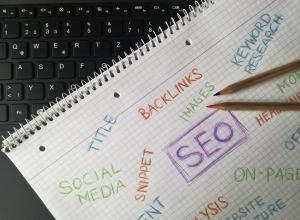
That's why search visibility matters.
A website should be built with search engines and users in mind.
That means:
- Clear page titles
- Helpful content
- Logical page structure
- Internal links
- Local SEO where relevant
For Sheffield businesses, appearing in local search results can often be the difference between winning and losing enquiries.
If somebody searches for "web designer Sheffield", "accountant Sheffield" or "builder Sheffield", they're unlikely to scroll through multiple pages of results looking for a business.
They usually contact one of the first businesses they find.
Google provides a useful SEO Starter Guide for businesses wanting to learn more.
To learn more about our web development and digital services:
Give Visitors A Clear Next Step
Clear Calls to Action
One of the simplest ways to improve a website is to make it obvious what visitors should do next.
That could be:
- Contacting the business
- Requesting a quote
- Booking a consultation
- Viewing services
Visitors should never be left wondering where to click next.
Every page should guide them towards taking action.
If a visitor is ready to speak with you, they shouldn't have to search around your website to figure out how.
Final Thoughts
Most business websites don't fail because they look bad.
They fail because they create confusion.
A good website makes things clear.
It answers questions, builds trust and helps visitors take action.
Whether you're a start-up in Sheffield or an established local business, your website should make it easy for potential customers to understand what you do, trust your business and take the next step.
If you're unsure whether your website is doing that, try looking at it through the eyes of a first-time visitor.
Could they understand what you do within 10 seconds?
If not, that's probably the first thing worth improving.
Because in most cases, the businesses generating the most enquiries online aren't necessarily the best businesses.
They're simply the easiest to understand.